


CyberArk manages standing credentials. Britive eliminates them.
CyberArk secures the credential, but in a world where non-human identities outpace humans 100:1, the real threat is the permanent access left behind. Britive replaces standing risk with runtime-provisioned, auto-revoked permissions. Nothing exists before the request, and nothing remains after.
See what's standing in your environment →







CyberArk's JIT:
A privileged account is created, stored in the vault, and temporarily checked out. The account — and its underlying permissions — exist before the request and continue to exist after the session ends. The vault controls access to the credential. The credential controls standing access to the resource. Both persist.
Britive's Ephemeral JIT:
No account is created ahead of time. No credential sits in a vault. At the moment of request, Britive calls the cloud provider's native API and mints a time-bound permission scoped to exactly what the task requires. When the task ends, the permission is revoked automatically. Nothing exists before the request. Nothing remains after.
CyberArk's JIT is access management applied to a static credential. Britive's JIT is access elimination — the credential only exists during the task. One manages the risk. The other removes it.

Why Britive's Ephemeral JIT Scales, Lowers Cost, Eliminates Risk
Built to Scale
CyberArk’s Privilege Cloud may be SaaS-hosted, but it still relies on a legacy architecture: forcing users and pipelines to route through session proxies and check out standing credentials. Britive is API-first and proxy-less by design. New cloud environments inherit policy automatically without needing to configure complex network connectors or jump servers. Fiserv governs AWS, Azure, GCP, OCI, Kubernetes, and Snowflake from one frictionless platform.
Lower Cost by Design
Even as a SaaS platform, CyberArk requires piecing together multiple disparate modules to achieve hybrid coverage, often requiring significant professional services to integrate. Britive deploys cloud environments in weeks without heavy professional services for standard use cases. One unified platform replaces 3–4 siloed tools, drastically lowering your Total Cost of Ownership.
Risk Reduced at the Privilege Layer
CyberArk's vault protects the credential but leaves the underlying cloud IAM entitlement in place. AWS IAM roles, Azure RBAC assignments, GCP bindings, SaaS permissions — all remain as standing access. Britive removes them. Every privileged session begins from zero and ends at zero.
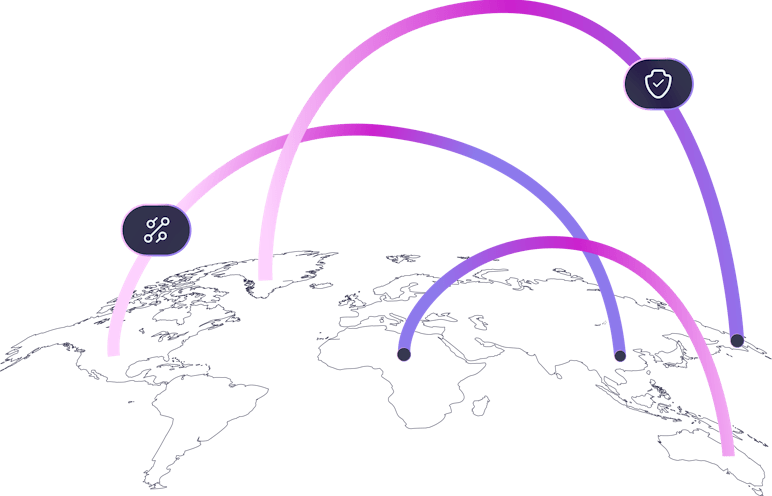
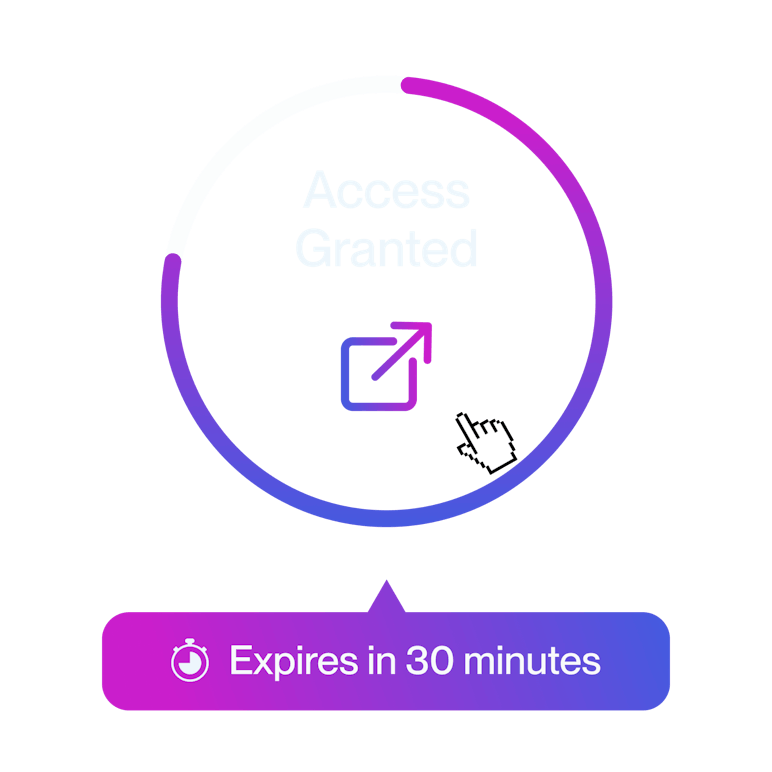
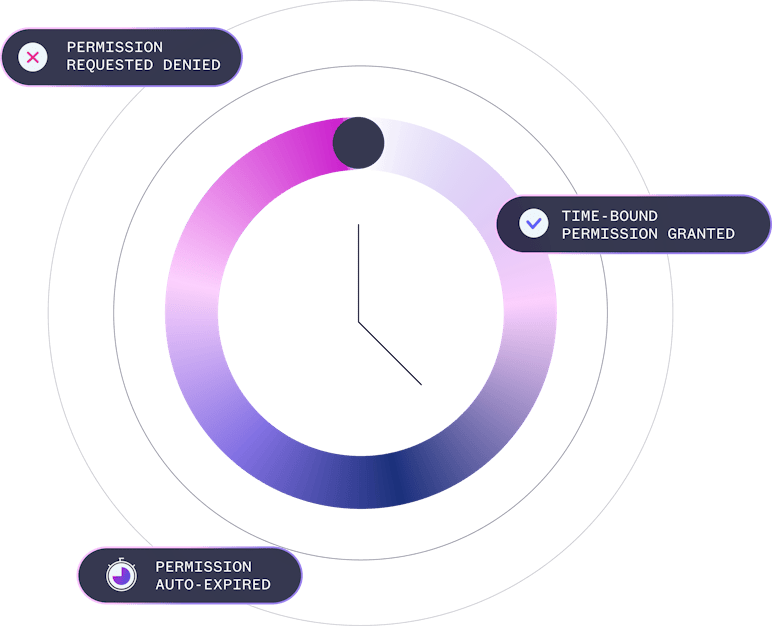
Moving beyond CyberArk in three steps — without replacing what's working.

Step 1 — Map what CyberArk covers. And what it doesn't.
Britive's surfaces every standing permission in your AWS, Azure, and GCP environments — every IAM role, every RBAC assignment, every service account entitlement. Most teams find 60–70% of their privilege surface is ungoverned by their current PAM deployment. Establishing a central view of identities provides the full scope of what needs to be secured.
Step 2 — Replace standing access with runtime profiles.
For every standing permission the assessment surfaces, Britive creates a JIT access profile. The engineer or pipeline requests the profile, Britive provisions scoped access via the cloud provider's native API, and the permission is revoked automatically when the task ends. CyberArk continues to govern and manage access for the on-prem layer while Britive extends access management to areas outside of CyberArk's scope.
Step 3 — One policy. Every identity. Every environment.
As cloud environments and use cases continue to expand, human developers, CI/CD pipelines, service accounts, and AI agents can all be governed under one policy model with one audit trail for streamlined and unified access security and enforcement. PCI DSS, SOC 2, DORA, and SEC continuous compliance evidence is automatic. No quarterly scramble for audit requirements and no manual reconstruction of log data. The state of access is always current because nothing persists past the session.
CyberArk vs Britive
The architectural difference, side by side
CyberArk vs Britive
The architectural difference, side by side
CyberArk
Britive
Core Architecture
Even in SaaS form, the core engine relies on storing static secrets in a vault and routing sessions through heavy proxies.
Permissions are provisioned at runtime time via native cloud APIs and revoked automatically. No vaults or proxies required.
Cloud IAM
Cloud access is handled by a separate module added onto the vault foundation, resulting in potentially fragmented policies.
Complete entitlement visibility and JIT access enforcement natively built into a single policy engine across AWS, Azure, GCP, and OCI.
Deployment & Time to Value
18–36 months for enterprise. High professional services overhead required to configure required network connectors, session managers, and modules.
Weeks for cloud environments using native APIs. No professional services for standard cloud use cases.
Non-Human Identities
Credential-centric model for service accounts with vaulting and rotation of static secrets for workloads.
First-class NHI governance. OIDC workload federation, JIT per pipeline run.
Agentic AI
Lacks architectural governance for dynamic MCP connections and relies heavily on standard machine credentials.
Distinct identity class governed by an MCP Gateway and agent registry. Access minted strictly for AI's task duration with full audit trail.
SaaS Coverage
Primarily manages SaaS access by vaulting shared administrative credentials or relying on basic SSO step-ups.
Grants dynamic, auto-revoking access for Snowflake, Salesforce, Atlassian, ServiceNow, GitHub, and 100+ applications.
Developer Adoption
Forcing developers to break their native flow to route through a web portal or session proxy often leads to bypassed security controls.
Integrates seamlessly via PyBritive CLI and Terraform provider. Security is invisible; developers stay in their native workflows.
Vendor Risk
PANW acquisition pending. Roadmap and pricing direction uncertain.
Independent. Sole PAM provider for AWS Security Hub Extended. Recognized by Aragon Research for pioneering work in AISP.
See what's standing in your environment, and what vault-based PAM tools aren't reaching.
Schedule a demo to see what needs to be secured in your environment.
FAQ
What do you mean by “ephemeral JIT access”?
'%20stroke-width='2'/%3e%3cdefs%3e%3clinearGradient%20id='paint0_linear_1063_5522'%20x1='0.871795'%20y1='1.23504'%20x2='20.1122'%20y2='10.6379'%20gradientUnits='userSpaceOnUse'%3e%3cstop%20stop-color='%23CA1ECC'/%3e%3cstop%20offset='1'%20stop-color='%233E5DE0'/%3e%3c/linearGradient%3e%3c/defs%3e%3c/svg%3e)
Ephemeral JIT means the privilege itself does not exist until it is requested. Access is created at runtime, scoped to the task, and removed when the task ends. Nothing stands by before or after.
How is this different from traditional JIT access?
Traditional JIT limits when a credential can be used. The privileged role still exists. Britive limits when privilege exists. If the work is not happening, the privilege is not there.
How does this work with Agentic AI and autonomous workflows?
Agentic AI needs access that is dynamic, task-scoped, and short-lived. Britive treats AI agents as first-class identities and applies the same access model used for humans and automation. Privilege is created at runtime for a specific action, scoped by policy, and removed immediately after. Agents never hold standing access or long-lived credentials, even as they act autonomously.
Does this work for machine identities and automation?
Yes. The same access model and policies apply to pipelines, service accounts, and automated workflows.
Can Britive integrate with ___?
Yes! Britive is API-first and integration-friendly, allowing seamless out-of-the-box integrations with cloud infrastructure providers (AWS, GCP, Azure, etc.), SSO & Identity Providers (Okta, Microsoft Entra ID / Azure AD, Ping Identity), SIEM & Logging Tools (Splunk, Datadog, etc.) and DevOps & CI/CD Pipelines (Terraform, GitHub Actions, Kubernetes, etc.).
You can find a starting list of our integrations here.
Does Britive allow the import of privileged accounts for other systems?
Yes, Britive offers the ability to import privileged accounts from other systems for seamless integration and centralized management. Privileged accounts from cloud platforms like AWS, Azure, and Google Cloud, as well as on-premises systems, can be imported into Britive. Automated discovery simplifies the process, identifying existing accounts for streamlined integration.
Does the Britive solution offer any "break glass" access?
Yes, Britive offers "break glass" access capabilities, including support for managing emergency access to critical accounts such as AWS root accounts. This ensures operational continuity and secure access during emergencies. This includes strict access policies, logging, and enforcement of strong authentication methods for enhanced security.
Break glass access is also strictly monitored and governed by approval workflows, ensuring that usage is authorized and fully auditable.
Does Britive support session recording?
Yes, Britive's session recording capability is lightweight and easy to deploy for selective monitoring of RDP and SSH sessions.
Do I still need a vault?
Britive offers vaults where static secrets are unavoidable. For cloud and SaaS privileged access, Britive issues ephemeral privileges directly and does not depend on stored admin credentials.
What about audits and compliance?
Every request, decision, and expiration is logged. You can see who had access, to what, and for how long without reconstruction.
Case studies
Britive in the Real World
001
002
003
001
002
003




Financial Services Company Streamlines Access Management
Forbes Saves Costs & Removes Standing Privileges to Align with Zero Trust Security
Fortune 500 Retail Giant Eliminates Standing Access Across Growing Cloud Footprint
7000+
54k+
67k+
30,000+
400+
< 30 min
Privileged human identities managed
Static Privileges Eliminated
Static privileges eliminated across all cloud providers
Non-human identities access managed
Identity profiles managed in GCP
Total on and off-boarding time, reduced from 3 days